happy family

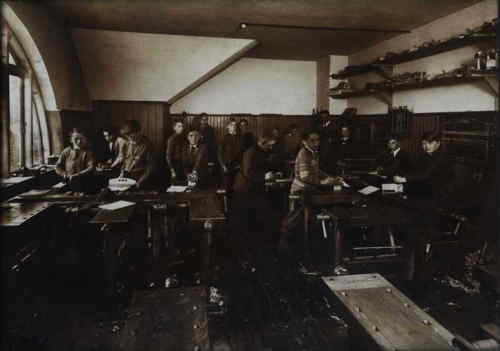
YOUTH FAULTS, LIES, AND CRIMES

Classifications of children’s faults—Peculiar children—Real faults as distinguished from interference with the teacher’s ease—Truancy, its nature and effects—The genesis of crime—The lie, its classes and relations to imagination—Predatory activities—Gangs—Causes of crime—The effects of stories of crime—Temibility—Juvenile crime and its treatment. Siegert[1] groups children of problematical nature into the following sixteen classes: the sad, the extremely…


happy family

YOUTH GYMNASTICS

The story of Jahn and the Turners—The enthusiasm which this movement generated in Germany—The ideal of bringing out latent powers—The concept of more perfect voluntary control—Swedish gymnastics—Doing everything possible for the body as a machine—Liberal physical culture—Ling’s orthogenic scheme of economic postures and movements and correcting defects—The ideal of symmetry and prescribing exercises to bring…

Women in the New Age

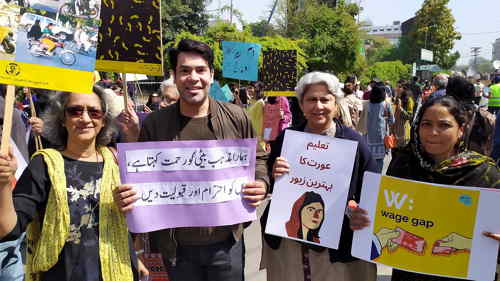
Nothing could be plainer than the effect that the increasing economic security of women is having upon their whole habit of life and mind. The diminishing marriage rate and the even more rapidly diminishing birth rates show which way the wind is blowing. It is common for male statisticians, with characteristic imbecility, to ascribe the fall in the marriage rate to a growing disinclination on the male side. This growing disinclination is actually on the female side. Even though no considerable body of women has yet reached the definite doctrine that marriage is less desirable than freedom, it must be plain that large numbers of them now approach the business with far greater fastidiousness than their grandmothers or even their mothers exhibited. They are harder to please, and hence pleased less often. The woman of a century ago could imagine nothing more favourable to her than marriag

Woman Suffrage

It is my sincere hope that nothing I have here exhibited will be mistaken by the nobility and gentry for moral indignation. No such feeling, in truth, is in my heart. Moral judgments, as old Friedrich used to say, are foreign to my nature. Setting aside the vast herd which shows no definable character at all, it seems to me that the minority distinguished by what is commonly regarded as an excess of sin is very much more admirable than the minority distinguished by an excess of virtue. My experience of the world has taught me that the average wine-bibber is a far better fellow than the average prohibitionist, and that the average rogue is better company than the average poor drudge, and that the wors